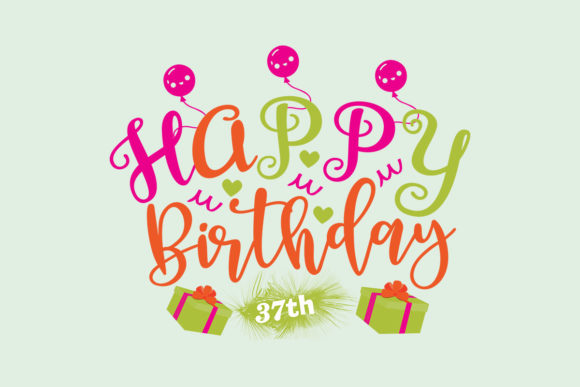
Reviewing the Happy Birthday 37th SVG for Real Embroidery
As a designer who spends more time staring at stitch simulations than actual finished garments, I approach every new digital embroidery file with a mix of curiosity and skepticism. We have all been there: you download a cute graphic, load it into your software, and realize halfway through digitizing that the lines are too close together or the shapes don't translate well to thread. That is why I took a close look at the Happy Birthday 37th SVG before committing it to a client project. This isn't just about whether the image looks good on a screen; it is about how it behaves as a machine embroidery design on real fabric, under the needle, and in the hands of a customer.
The first thing that strikes me about this asset is its structural simplicity. The description notes that it is made with 100 vector shapes. In the world of Crafts and Graphics, this usually implies a clean, scalable structure. For an embroiderer, "scalable" is a double-edged sword. Yes, you can resize it, but you must be careful not to shrink it so much that your satin stitch columns become indistinguishable blobs or your running stitch outlines disappear into the weave. The mood of this specific design is celebratory yet mature. Thirty-seven is a milestone that often calls for something slightly more sophisticated than the balloon-heavy graphics we use for toddlers. This design feels versatile enough to sit comfortably on a boutique sweatshirt or a high-end tote bag without looking juvenile.
Putting the Design to the Test: A Real-World Scenario
To truly evaluate the Happy Birthday 37th SVG, I imagined a specific order that comes up frequently in my shop: a custom sweatshirt embroidery job for a local boutique. The client wanted a chic, minimalist look for a thirty-seventh birthday celebration. They requested the design on a heather grey French terry cotton. This is a perfect test case because French terry has a looped texture that can sometimes swallow fine details if the stitch density isn't managed correctly.
Because the file allows for easy color changes, I could immediately visualize how it would pop against the grey background. The vector nature of the file means that when I import it into my digitizing software to create the actual embroidery file (converting from SVG to PES, DST, or JEF), the paths are clean. There are no jagged edges or unnecessary anchor points that often cause machine stuttering. I envisioned using a bright white or perhaps a metallic gold thread for the numbers to create contrast. The layout of the "37th" combined with the "Happy Birthday" text offers a balanced composition. It doesn't feel cramped, which is crucial when you are working within a standard hoop size. If you are planning to use this for a tote bag design or a larger back-of-shirt placement, the 100 vector shapes allow you to scale it up significantly without losing definition, provided you adjust your stitch settings accordingly.
Fabric Considerations and Technical Challenges
While the design is promising, practical application requires us to talk about where things can go wrong. The product description mentions it is ready for dark or white T-shirts, stickers, apparel, and even mugs. As an embroiderer, I need to filter this through the lens of thread and fabric. Using this on a dark t-shirt is absolutely feasible, but it demands a solid underlay. If you are stitching white thread over black fabric, any gap in your fill stitch coverage will reveal the dark garment underneath, ruining the crisp look of the handmade product.
Texture is another factor. If you attempt this on a highly textured fabric like a thick wool blend or a waffle knit, the finer details of the vector shapes might get lost. Similarly, stretchy fabrics require a cut-away stabilizer rather than tear-away to prevent the design from distorting after the first wash. I would also advise caution with curved surfaces like caps. While the design is resizable, the curvature of a cap front panel can distort the perception of the text. It is best to test a mockup on a curved surface template before stitching the final custom apparel item.
For those interested in creating an embroidered patch, this design is a strong candidate. The distinct shapes lend themselves well to a merrowed edge finish. However, you must ensure the outermost stitches are dense enough to hold the patch shape securely. If you are selling these as design assets or finished patches, the durability of the stitch-out is paramount for customer trust.
Commercial Viability and Brand Consistency
For Etsy sellers and small shop owners, the visual appeal of a design directly correlates to buyer engagement. The Happy Birthday 37th SVG has a professional polish that elevates the perceived value of the finished product. It does not look like a clip-art afterthought; it looks intentional. This level of quality helps build brand consistency. If your shop specializes in personalized gifts, having a library of age-specific designs that maintain a cohesive style is invaluable.
When preparing printable mockups for your online listings, the clean lines of this graphic render beautifully. Customers shopping for holiday embroidery or birthday gifts often scroll quickly; a clear, legible design stops the thumb. However, remember that what looks good in a digital mockup must survive the reality of production. Always inspect small details. Are the corners of the numbers sharp? Is the spacing between the letters consistent? These nuances separate a hobbyist item from a commercial-grade product.
Practical Notes for the Working Designer
Before you run this design on a customer's garment, here is my checklist based on years of trial and error:
- Test on Scrap First: Never skip this step. Stitch the design on a scrap piece of the exact fabric you intend to use. This reveals issues with puckering or thread breaks.
- Check Thread Contrast: Ensure your chosen thread colors provide enough contrast against the fabric, especially for the smaller elements of the design.
- Review Stitch Density: Since this starts as an SVG, you are responsible for setting the density. Too dense, and the fabric stiffens; too sparse, and the backing shows through.
- Confirm Hoop Size: Make sure the scaled version of the design fits comfortably within your machine's hoop, leaving room for clamping.
- Inspect Small Details: Look closely at the connection points between the "37" and any decorative elements. Thin bridges can break easily during washing.
- Mockup in Black and White: Sometimes color distracts us from structural flaws. View your digitized version in monochrome to check the balance of light and dark areas.
- Stabilizer Selection: Match your stabilizer to the fabric weight. Heavy knits need different support than woven cottons.
- Licensing Check: While the file is described as ready for various uses, always confirm the specific license terms regarding commercial sales of finished items versus digital redistribution.
In conclusion, the Happy Birthday 37th SVG is a solid addition to a crafter's library. It bridges the gap between a simple graphic and a functional applique design or standard stitch-out. Its strength lies in its adaptability and clean vector foundation. However, its success ultimately depends on the skill of the operator. By respecting the limitations of fabric texture, choosing the right stabilizer, and paying attention to stitch density, you can turn this digital file into a cherished personalized gift or a best-selling item in your craft business. Whether you are making a single baby embroidery item or a batch of shirts for a party, this design offers the reliability and style needed for professional results.